(
2026
)
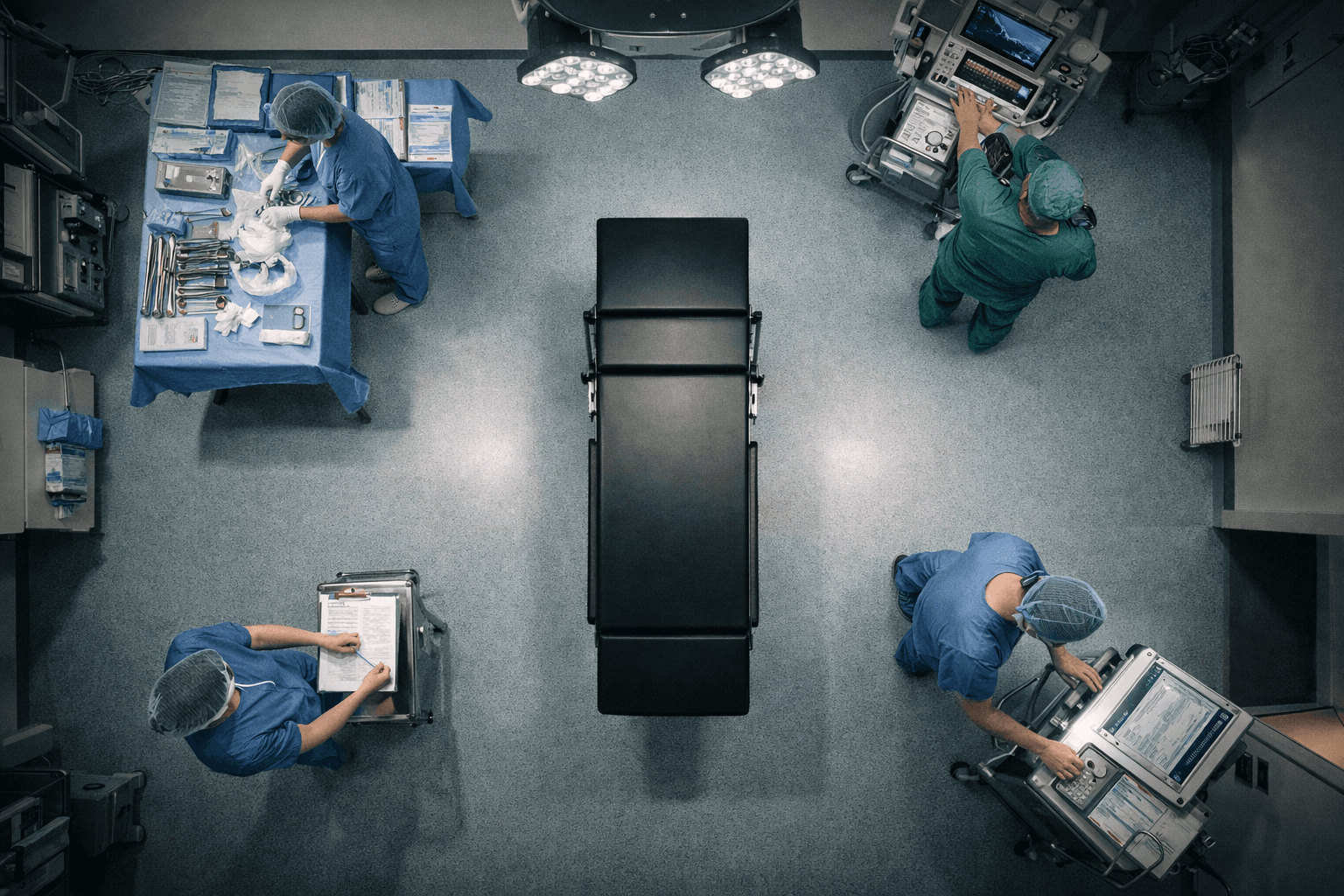
This trip began as a work mission: Surgical AI & Telesurgery Days 2026 in Ghent, Belgium. Three days of the world's best surgical AI researchers, surgeons, and builders in one room. It ended twelve days later with a long layover in Helsinki.
Here are the numbers, because they always tell their own story:
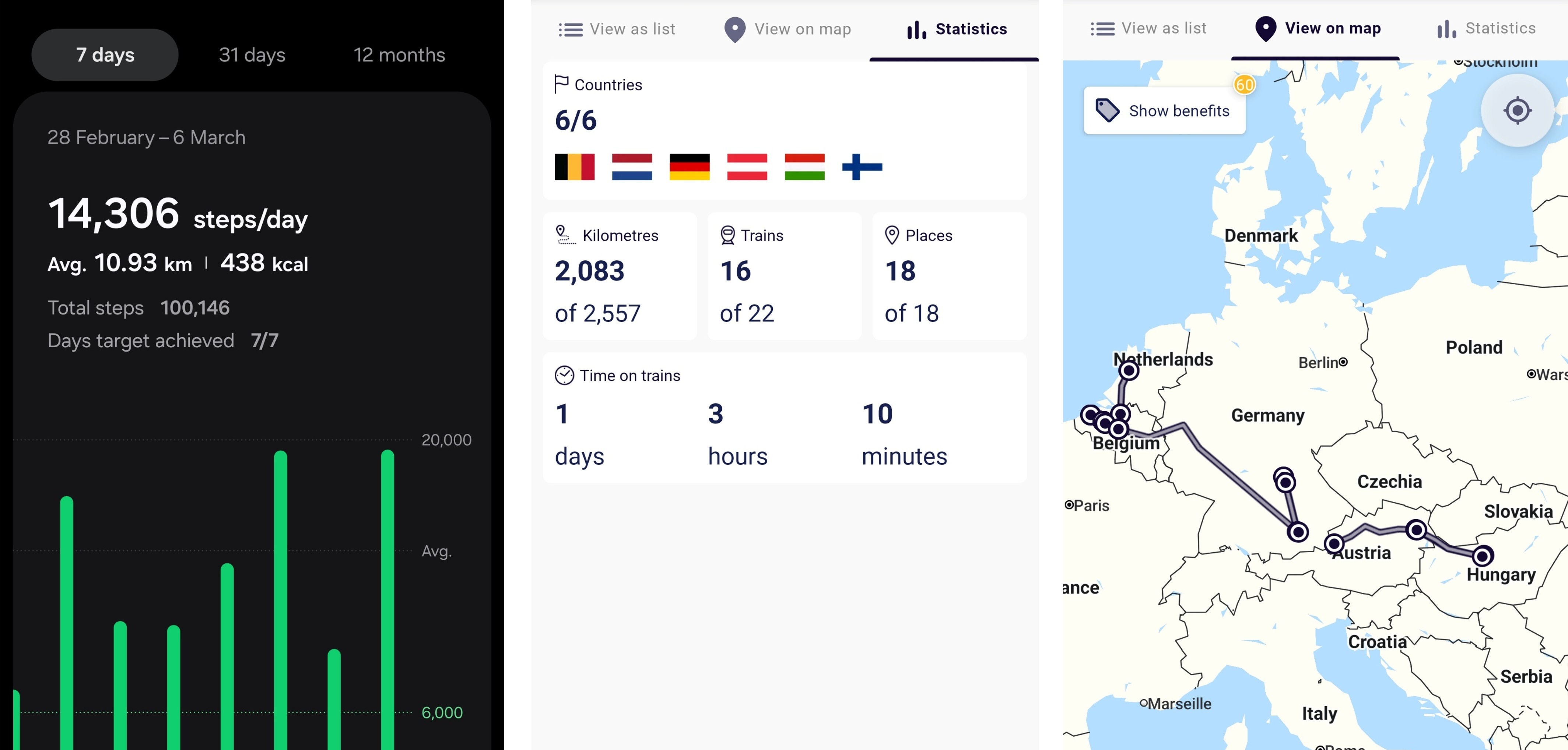
12 days on the road
5 countries: Belgium, Germany, Austria, Hungary, Finland
~11 km walked per day on average
1 overnight train across Europe
1 cancelled flight (thank you, Middle East airspace)
Several conversations I didn't expect
Ghent, Belgium — Feb 26–28
Where Surgery Meets Silicon
The conference was held at Oude Vismijn, a 17th-century fish market in the centre of Ghent, turned into a modern venue. Three days of dense, exciting, sometimes overwhelming content. Talks on vision-language models, autonomous surgery, telesurgery over 6G networks. A live robotic kidney surgery streamed from AZORG Hospital to the conference floor with an AI co-pilot running surgical phase recognition and AR overlay in real time.
That moment alone was worth the flight.
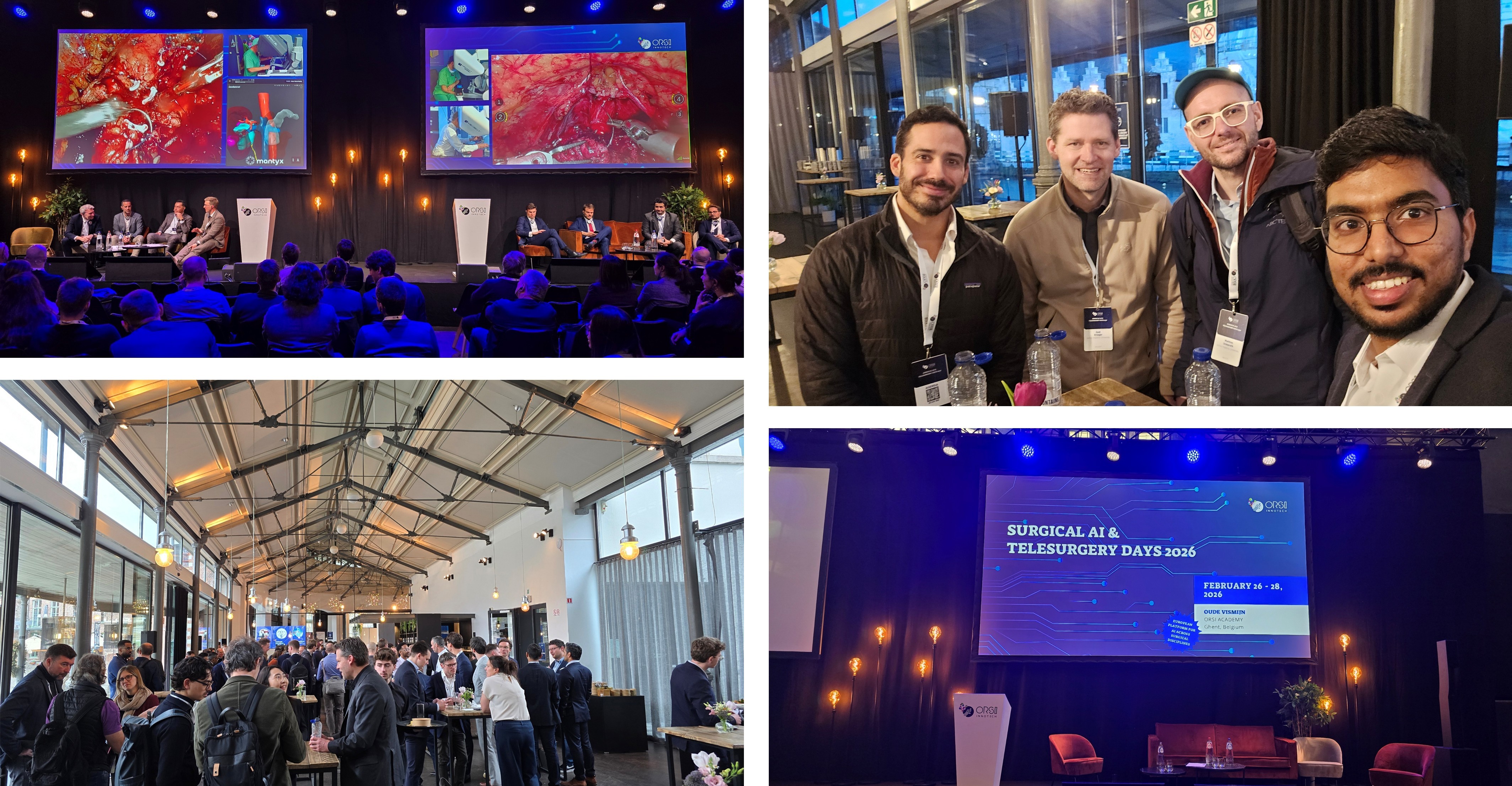
But the conversations in the hallways is where the real learning happened.
I met researchers from Johns Hopkins, UCL, NUS Singapore, TU Dresden, Imperial College London. I met a founder who sold his surgical AI company to a global medtech giant.
Day 3 moved to ORSI Academy in Melle: Europe's largest robotic surgery training centre. Hands-on demos, industry sessions, a startup fair. The kind of place that makes you feel the future of surgery is being built right now, quietly, in a small Belgian town most of the world has never heard of.
Bruges, Belgium — March 1
The City That Forgets to Rush
Thirty minutes by train from Ghent.
I'd read that in the 15th century, Bruges was the hub of luxury goods and leisure travel for European royalty. You can feel it. The Duke's Palace, with its private garden tucked behind stone walls, still carries that unhurried aristocratic quality and the sense that whoever lived here had absolutely nowhere to be.
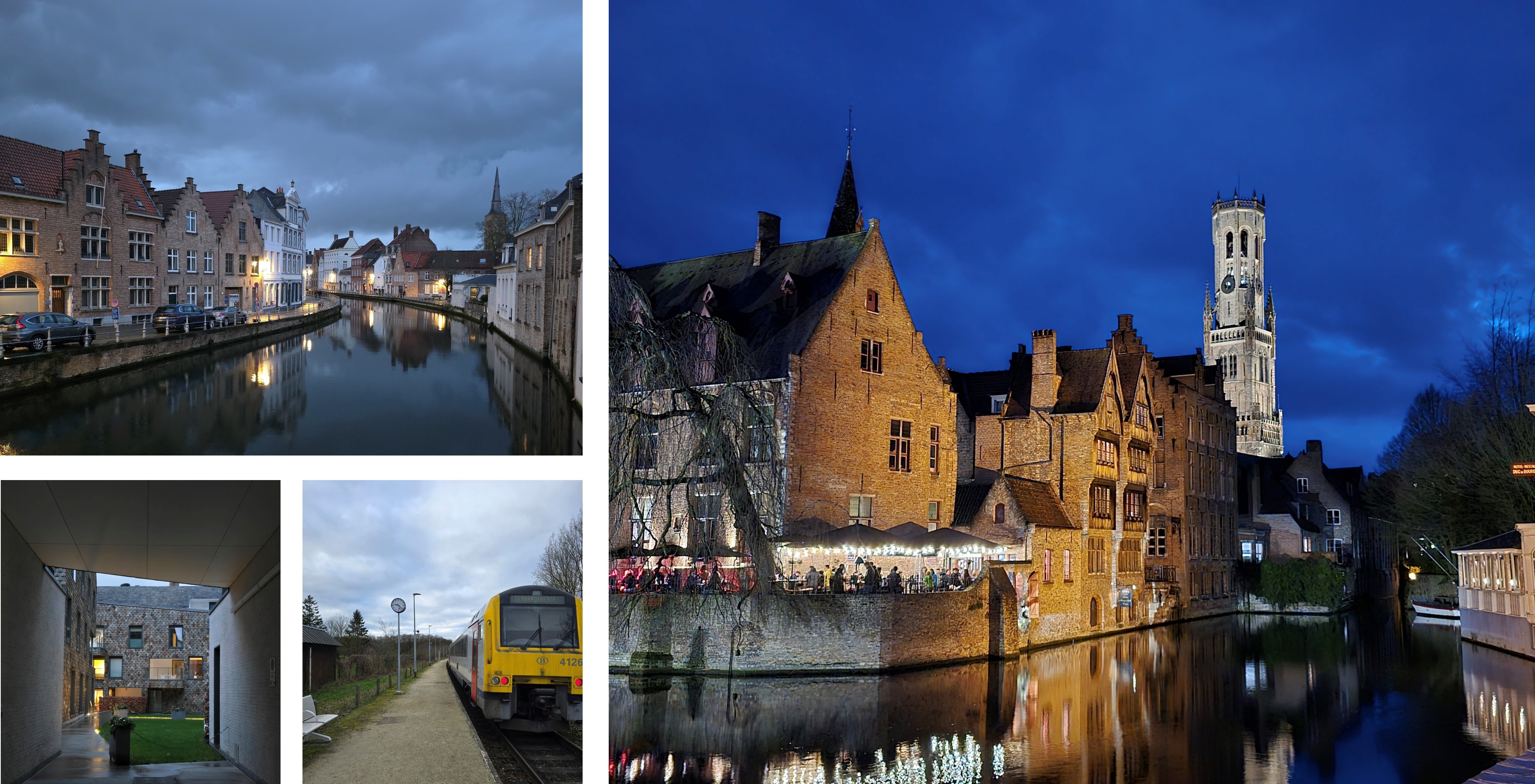
Bruges in early March, before the tourist season is a different place from the postcard version. The canals, the medieval laneways almost entirely yours. I walked the whole city without a map.
Bruges reminded me to slow down.
Brussels, Belgium — March 2
180 Nationalities and One Good Meeting
I had a specific reason to stop in Brussels.
Met Arne from Hub Brussels, a programme that supports international startups setting up in the Brussels Capital Region.
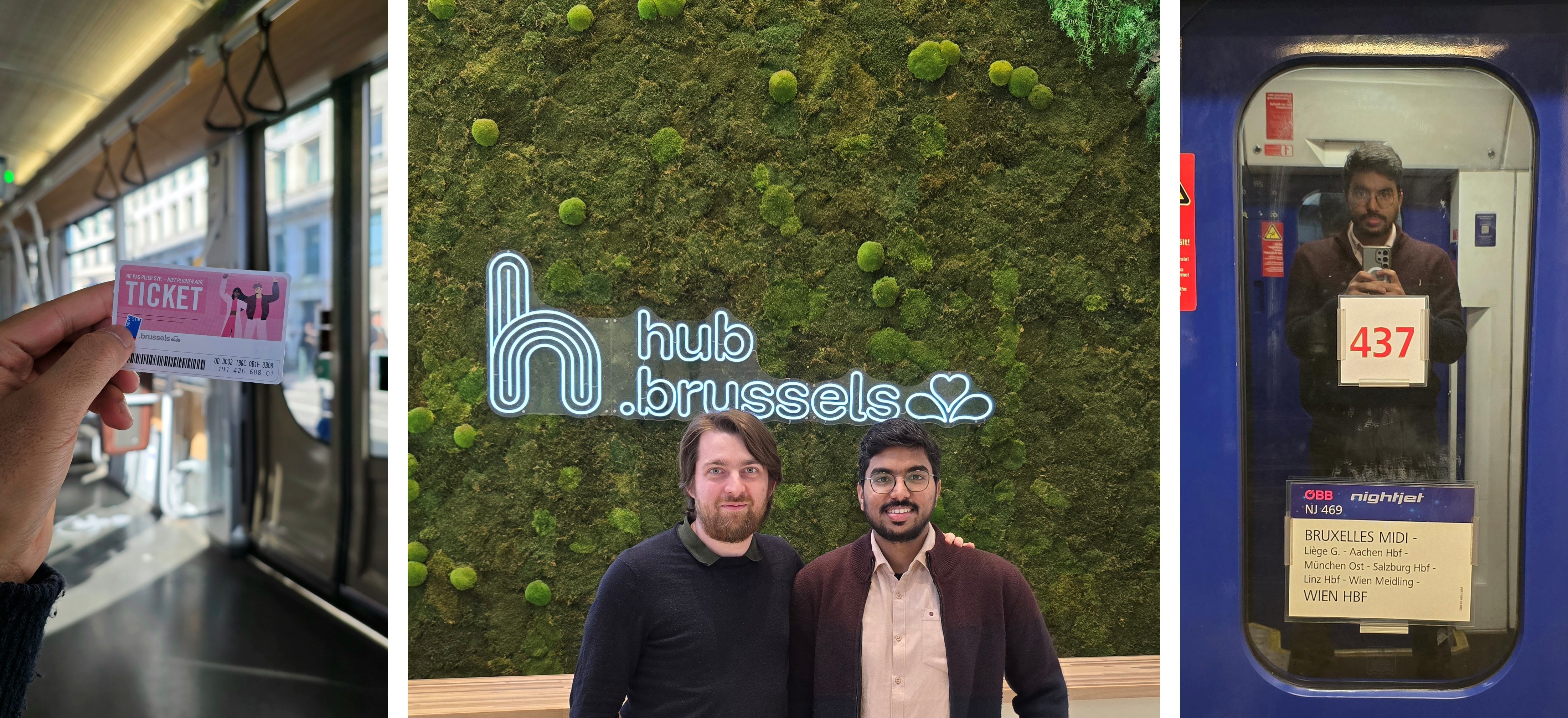
Brussels, he mentioned, has 180 nationalities living in it. The highest density of any city in Europe, owing to its role as the EU capital. You feel it immediately in the city's texture. Every neighbourhood is a different country.
Then: the OBB overnight train to Munich.
Erlangen & Nuremberg, Germany — March 3
History Encoded in Steel and Glass
Arrived in Munich early morning. Dropped bags at the hostel. Left immediately for Erlangen.
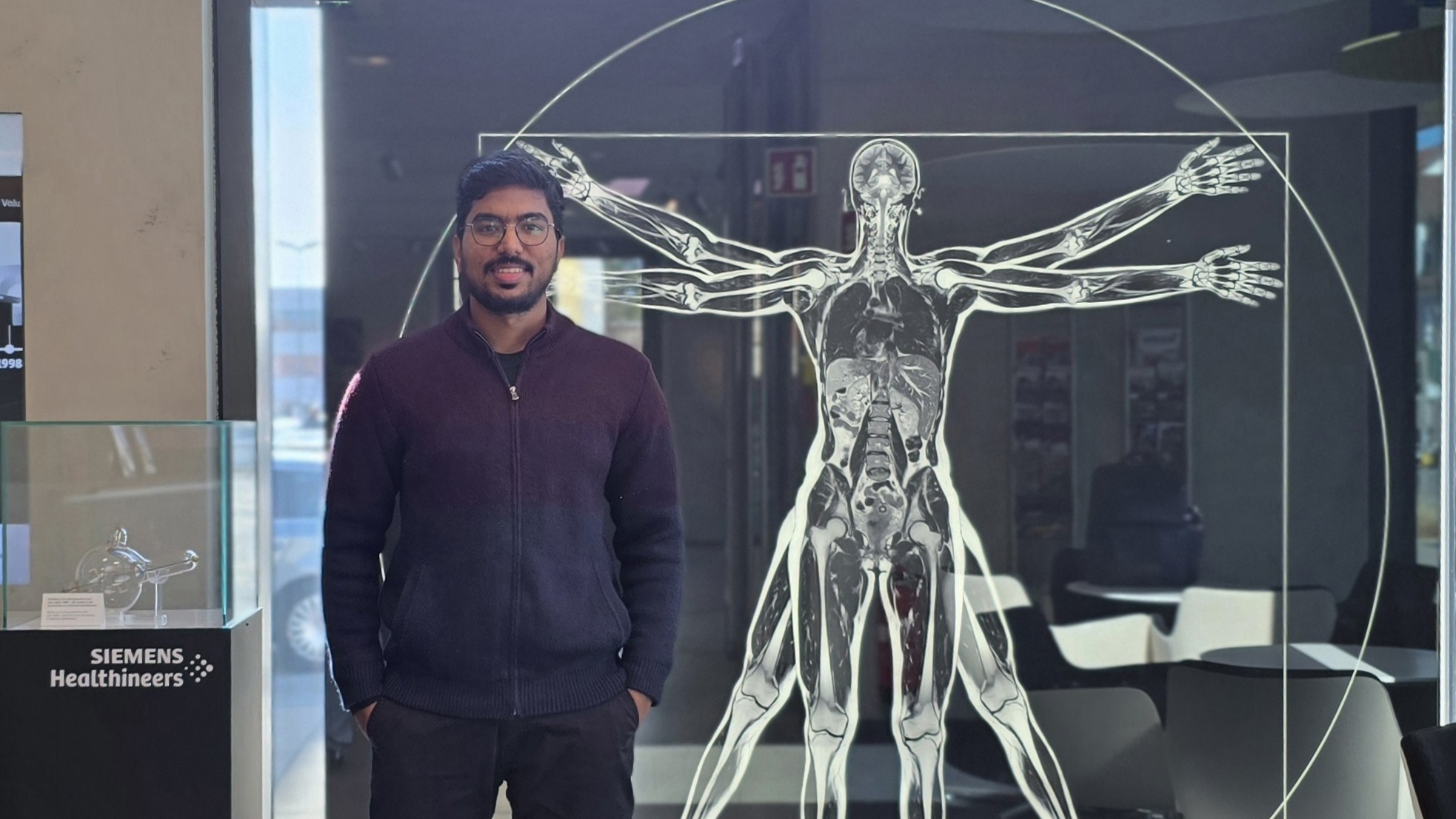
The Siemens Healthineers Museum is not on most tourist lists. It should be.
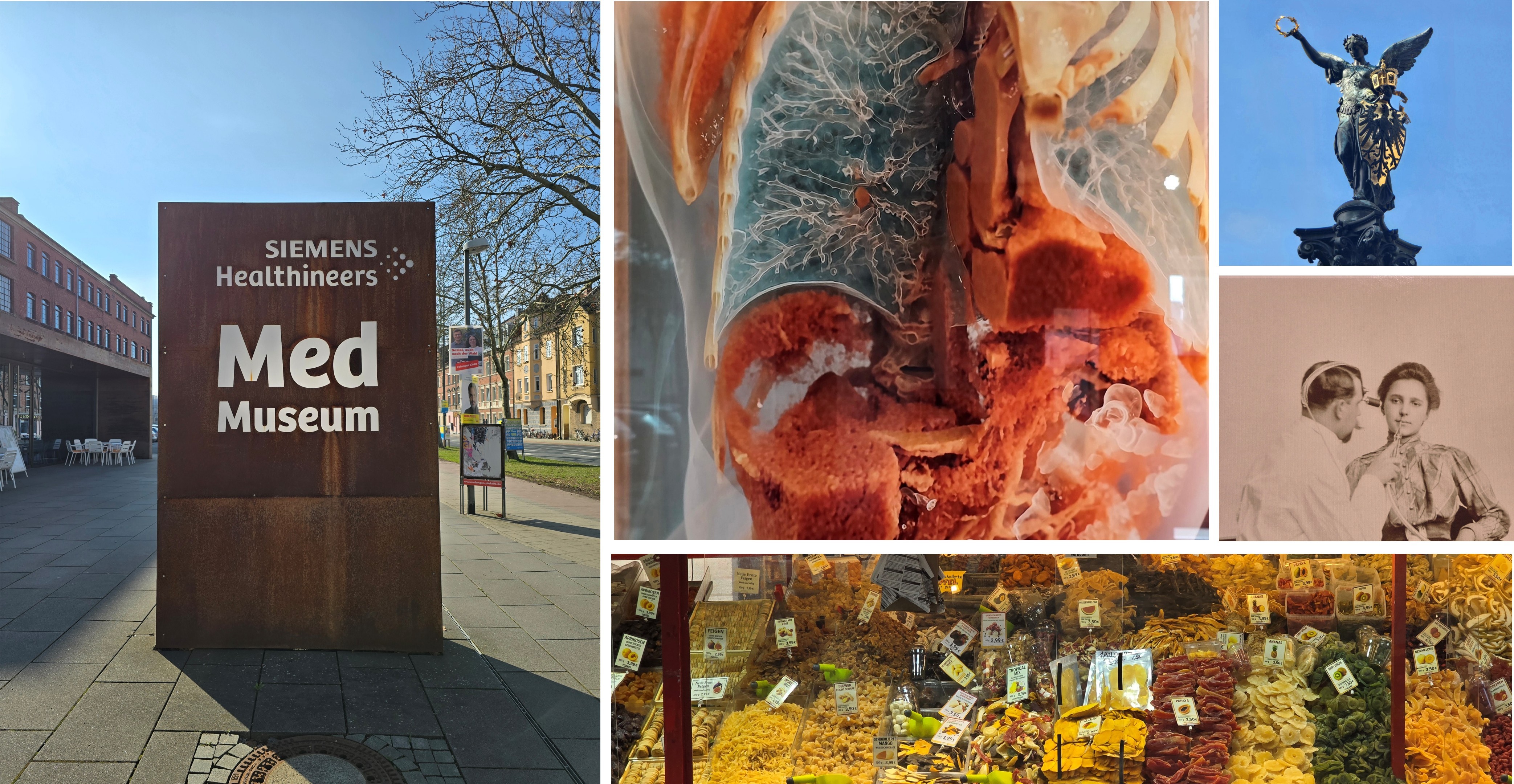
The history of medical imaging X-ray, CT, MRI, ultrasound told through original machines, patents, and the stories of the people who built them. You stand next to the first commercial CT scanner and realise that what felt like science fiction fifty years ago is now a Tuesday morning in any district hospital.
For someone building diagnostic and documentation technology, this museum is grounding. Every tool we take for granted began as a strange, improbable idea that someone decided to build anyway.
Two hours there. Then a proper lunch at Swamy Indian Restaurant in Erlangen, the first good Indian food after a long gap. Nuremberg Old Town in the evening. Medieval fortified walls, the old market square. Germany at its most itself.
Munich, Germany — March 4–5
The Museum That Stopped Me
Two days in Munich with no conference agenda. Just curiosity.
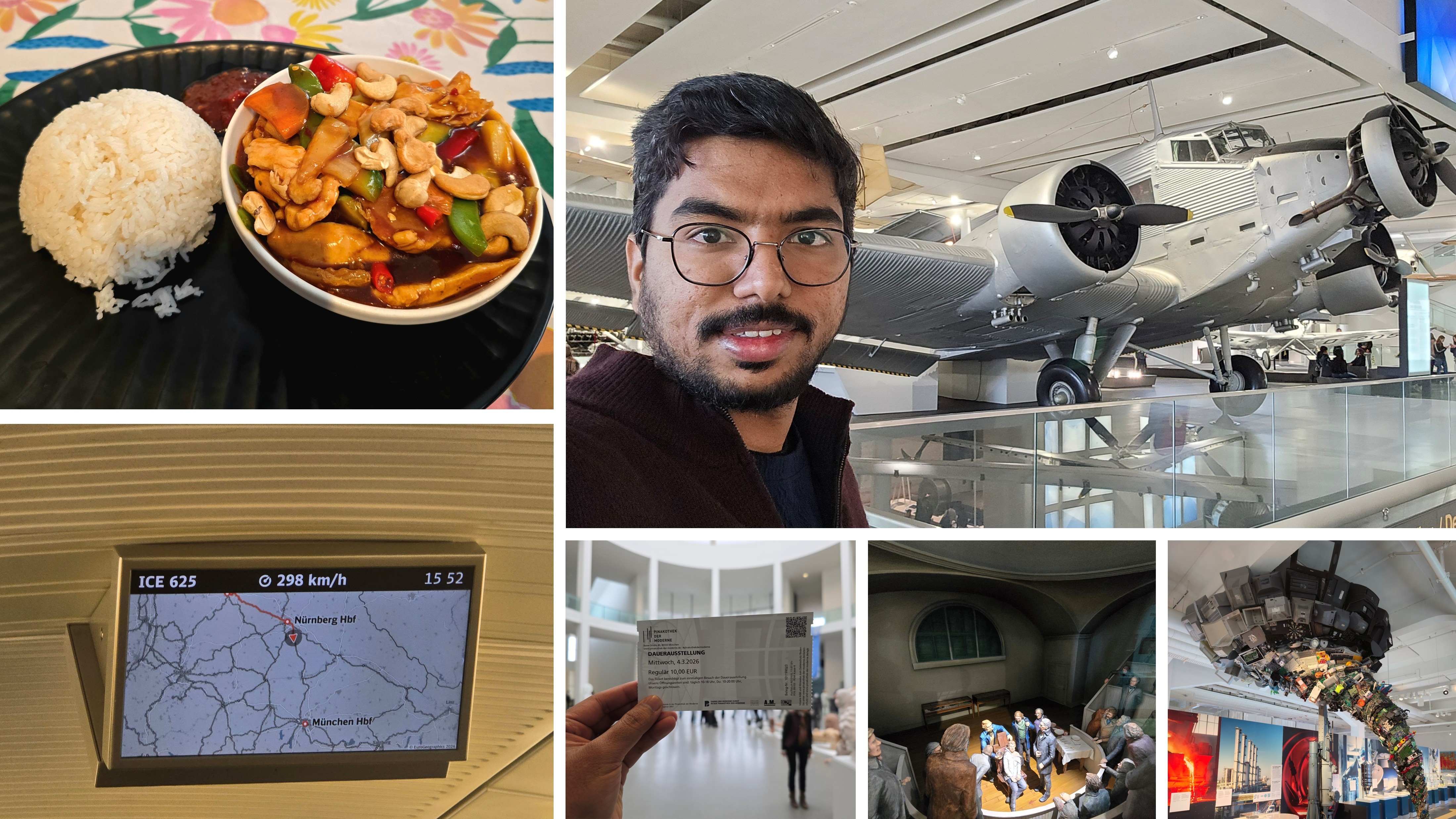
Die Neue Sammlung: The Design Museum is an extraordinary collection of 20th and 21st-century design objects. Furniture, cars, appliances, typefaces, medical equipment. The curators don't separate "art" from "utility". Walking through this museum was a kind of education I couldn't have gotten from a textbook.
Deutsches Museum the next day. The largest science and technology museum in the world. Precision engineering. Aviation. Energy. Four hours and I barely scratched the surface.
Salzburg & Vienna, Austria — March 5–8
Unexpected Detours
Reached Salzburg late at night. Found a Thai restaurant still open, sat down with two strangers, one from Argentina, one from Switzerland and had the loose, unhurried kind of dinner.
Salzburg in the morning was brief. The fortress above the old town, the Baroque streets, the river. Pleasant but familiar. After a while, European historic cities share a certain grammar, and you start to feel you've read this sentence before. I left by early evening.
Vienna was where the trip stretched unexpectedly.
I was supposed to fly home on March 6th. Qatar Airways via Doha. The flight was cancelled. Middle East airspace disruptions from the escalating conflict had closed critical corridors. There was a brief moment of frustration then I thought: I'm in Vienna. There are worse places to be stranded.
I rebooked. Finnair via Helsinki, March 9th. Three extra days. Vienna rewarded the extension.
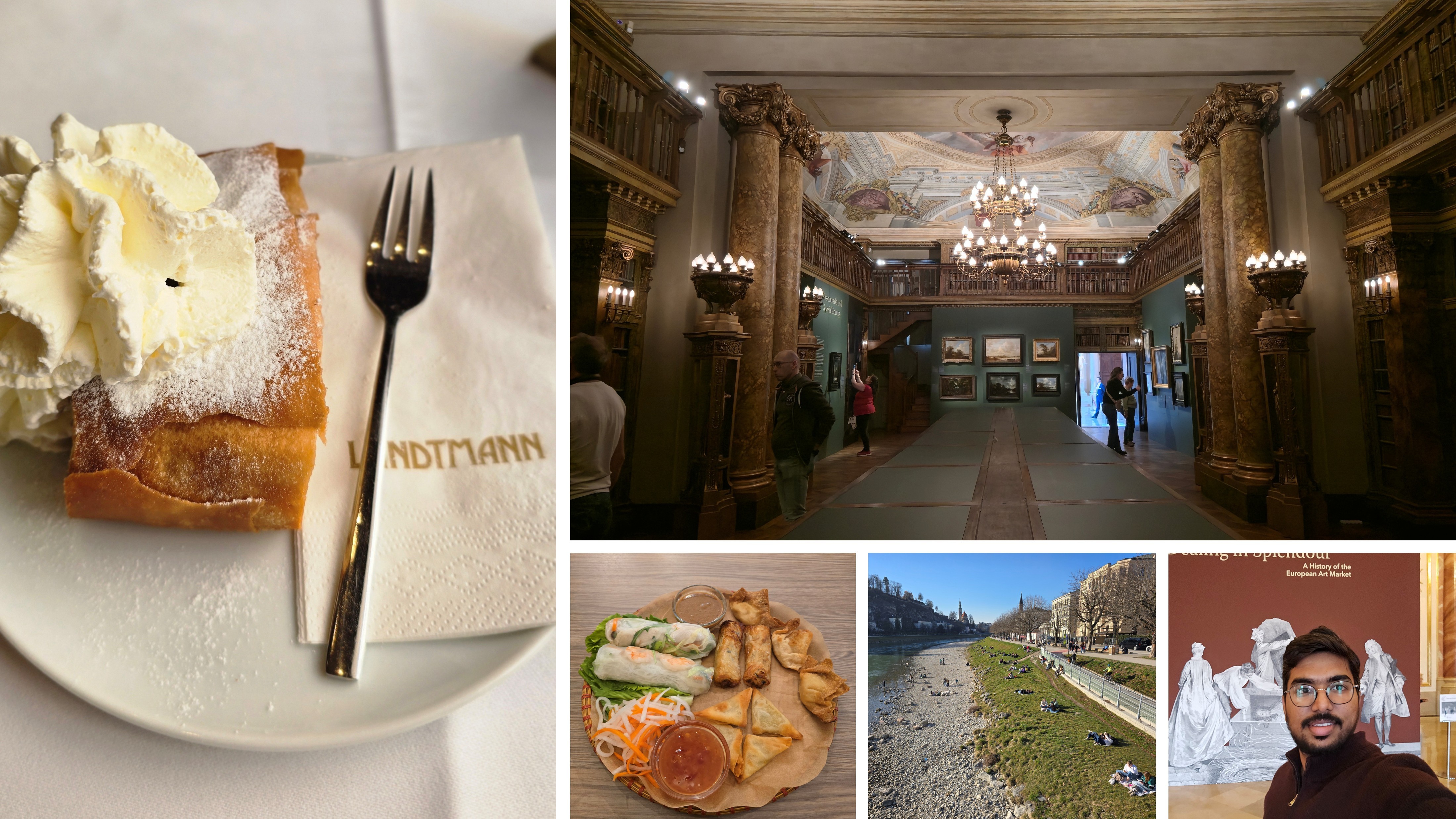
I walked the city properly, the Liechtenstein Palace, the 10th District, Naschmarkt. I averaged 10 km a day on foot. Vienna is a city built for exactly that.
Budapest, Hungary — March 7
An Hour on a Train Worth More Than the Destination
Morning train from Vienna's Hauptbahnhof. Two hours.
I walked from Keleti station through Pest, crossed the Chain Bridge on foot, arrived in Buda. On the train back to Vienna that evening, I met two students from Guangzhou, China doing a semester at a European university. We talked the entire journey. About India, about China, about how different our educations had been, about what we were each trying to build and why.
I have a theory about travel that this trip confirmed again: the best thing that can happen to you is rarely the thing you planned.
Helsinki, Finland — March 9
The Bonus City
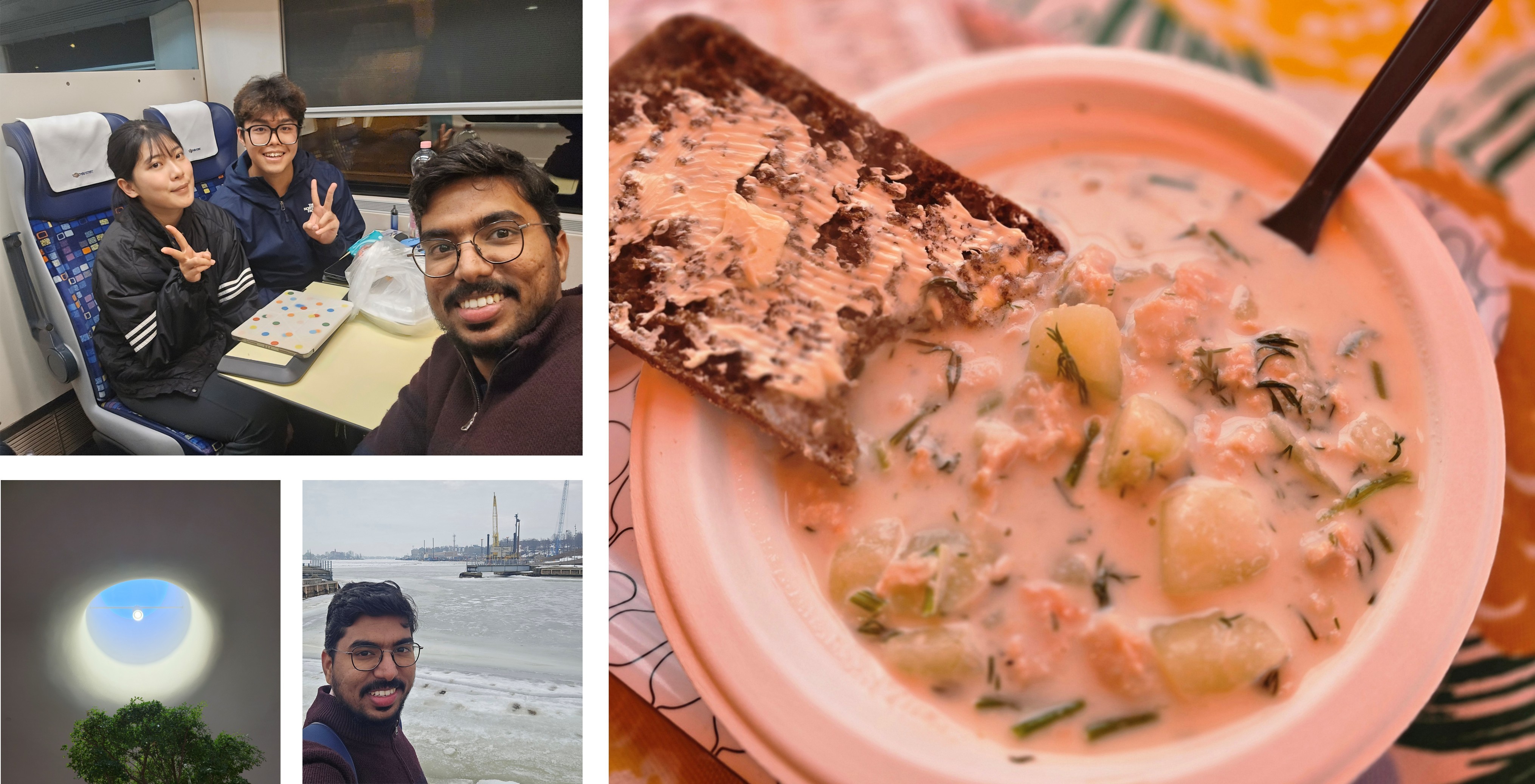
Helsinki in early March is cold, clean, bright in a specific Nordic way. The sea is frozen. The public library near the central railway station was one of the genuine surprises of the entire trip. Hot chocolate at Café Engel. Salmon soup at the open market near the harbour. Then the Finnair flight home. Helsinki → Delhi → Hyderabad.
What I Carried Back
Something harder to quantify.
I watched an AI system co-pilot a live surgery in real time and thought: this is the direction. I met a founder who crystallised my entire pitch in one sentence. I stood in a 12th-century hospital in Bruges and felt the long continuum of people trying to make medicine better. I learned from the Siemens museum that every transformative medical tool began as an uncertain bet.
———————————————————————————————————————————————————————————
If you’re an entrepreneur/researcher with ideas in the MedTech space, I would love to get in touch. Reach out to me at prashanth@nuevata.com 😊